
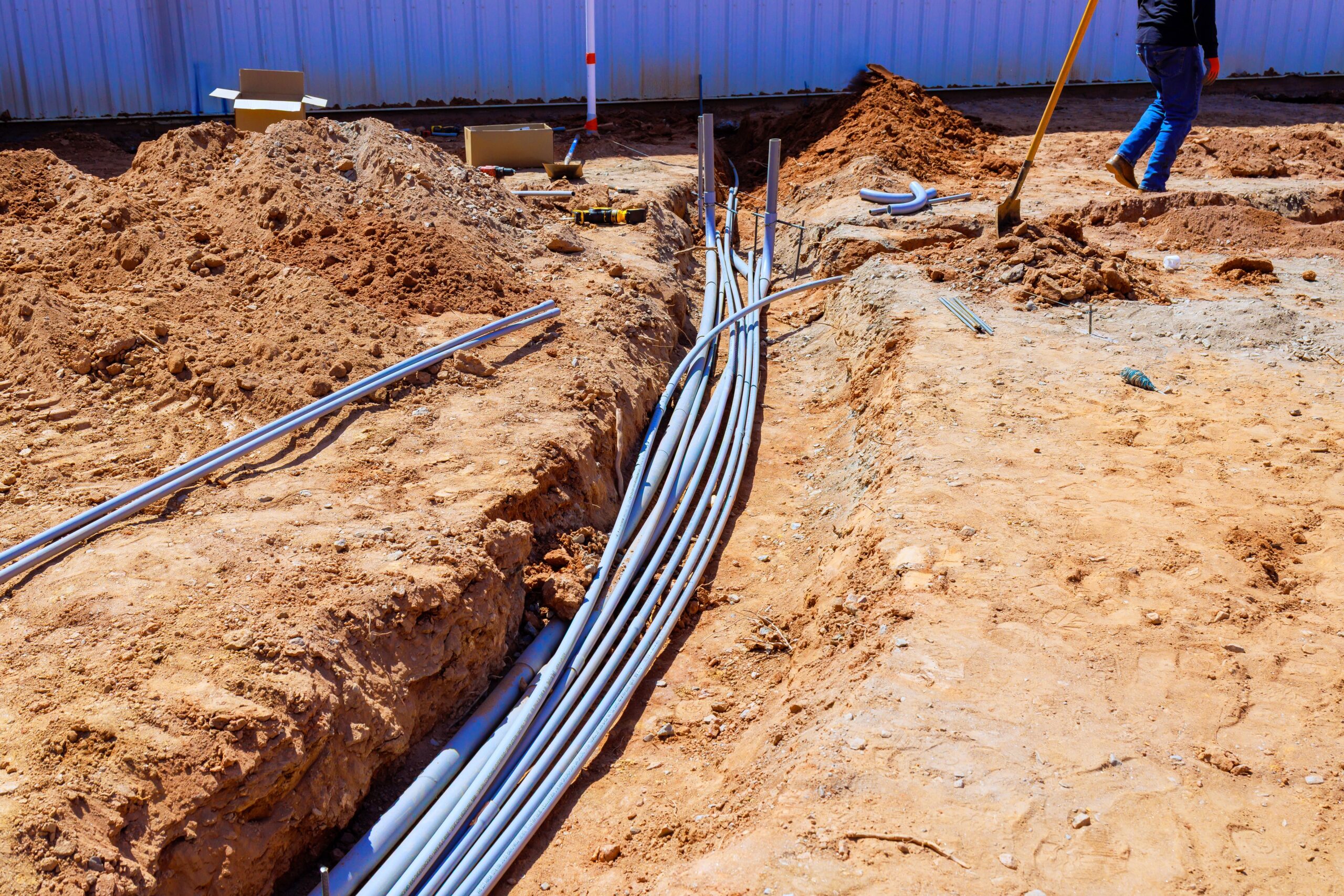
Modern construction projects don’t begin with what you see above ground, they begin below it.
From commercial developments and energy facilities to municipal infrastructure and industrial sites, underground utilities form the backbone of every successful project. Water, sewer, storm drainage, electrical, telecommunications, and gas systems must be carefully planned, coordinated, and installed long before vertical construction can move forward.
At TLC Construction Contract Services, we understand that properly executed underground utility work sets the tone for the entire project. In this article, we’ll explore why underground utilities are critical, common planning conflicts, and best practices for installation.
What Are Underground Utilities in Construction?
Underground utilities refer to essential infrastructure systems installed beneath the surface of a construction site. These typically include:
- Water lines
- Sanitary sewer systems
- Storm drainage infrastructure
- Electrical conduits
- Telecommunications lines
- Natural gas lines
Without these systems, buildings cannot function, sites cannot drain properly, and projects cannot pass inspections or meet regulatory requirements.
Why Underground Utilities Are Critical to Project Success
1. They Dictate Site Layout and Sequencing
Utility routing influences road placement, building orientation, foundation depths, and grading plans. Poor early coordination can force costly redesigns later.
2. They Impact Schedule and Budget
Delays in utility installation often halt vertical construction. Conflicts or rework below grade can significantly impact timelines and increase costs.
3. They Require Regulatory Compliance
Utility systems must meet local, state, and federal codes. Inspections, permitting, and documentation are all tied to proper underground installation.
4. They Affect Long-Term Performance
Improper installation can lead to drainage failures, line collapses, soil instability, or utility disruptions years after project completion.
Underground infrastructure is not simply a phase of construction, it is the foundation of long-term operational reliability.
Common Underground Utility Conflicts in Construction
Modern job sites are complex. Multiple systems must coexist within limited space. Common conflicts include:
Utility Congestion
Multiple lines competing for limited trench or corridor space.
Elevation Conflicts
Storm drainage, sewer, and water systems must maintain proper slopes while avoiding clashes with other utilities.
Unknown Existing Utilities
Unmapped or inaccurately marked utilities create safety risks and unexpected delays.
Poor Cross-Trade Coordination
Lack of communication between civil contractors, engineers, and vertical trades can lead to rework.
Proactive planning and experienced field management are essential to preventing these issues.
Best Practices for Underground Utility Planning
Successful underground utility work starts long before excavation begins.
Detailed Pre-Construction Review
Thorough plan analysis helps identify potential conflicts early.
Utility Coordination Meetings
Collaboration between civil teams, engineers, and project stakeholders ensures alignment before mobilization.
Accurate Surveying and Layout
Precise staking and elevation control reduce costly rework.
Subsurface Utility Investigation (SUI)
Locating existing utilities prior to excavation minimizes risk.
Phased Installation Strategy
Sequencing work correctly prevents overlap conflicts and supports overall schedule efficiency.
At TLC Construction Contract Services, planning is as critical as execution.
Installation Best Practices for Underground Utilities
Proper installation requires both technical expertise and field discipline.
Proper Bedding and Backfill
Correct soil preparation ensures pipe stability and longevity.
Compaction Standards
Inadequate compaction can lead to settlement, pavement failure, or structural instability.
Quality Control Inspections
Pressure testing, flow testing, and camera inspections verify performance before turnover.
Erosion and Sediment Control
Protecting surrounding areas during installation is essential for environmental compliance.
Underground utility installation is precision work and small errors can have long-term consequences.
How Underground Utilities Support Modern Infrastructure
Today’s construction projects demand more than basic connectivity. Utilities must support:
- High-capacity commercial developments
- Industrial and manufacturing facilities
- Energy infrastructure projects
- Municipal growth and expansion
- Data centers and technology hubs
As infrastructure demands grow, so does the need for experienced heavy civil contractors capable of managing complex underground systems.
Frequently Asked Questions About Underground Utilities
Why are underground utilities installed before vertical construction?
Because they provide essential infrastructure, water, drainage, and power must be in place before buildings can function or pass inspection.
What is the biggest risk during underground utility installation?
Utility conflicts and inaccurate elevations are the most common causes of delays and rework.
How can projects reduce underground utility delays?
Through early coordination, accurate surveying, subsurface investigations, and experienced civil contractors.
The Bottom Line: Build It Right Below Ground
Modern construction projects depend on strong foundations and that foundation begins with properly designed and installed underground utilities.
When planning, coordination, and installation are handled correctly, projects move forward efficiently, safely, and on schedule.
TLC Construction Contract Services brings the expertise, equipment, and field experience necessary to deliver reliable underground infrastructure for complex construction environments.
Need an Experienced Underground Utility Contractor?
If your project requires expert planning and installation of underground utilities, our team is ready to support you from pre-construction through completion.
Comments are closed.